

The Other Side
9/23/24
African spirituality, trance and dance
In many cultures, the line is not as clear as in others, so we turn to some parts of Africa to look at its rich traditions that retain a...
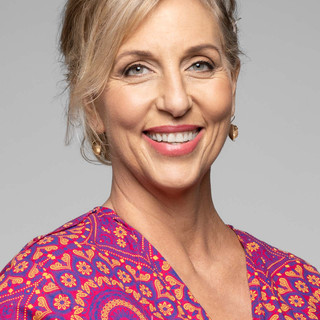
Written By
In many cultures, the line is not as clear as in others, so we turn to some parts of Africa
to look at its rich traditions that retain a close connection to the unseen world. Here’s the
interesting thing: we don’t have to look to near death to find a far closer link between the
worlds of the dead and the living.
Spirituality was central to Africa, and it formed an entire world. At the heart of most
indigenous belief systems and practices is the belief in animism, that all of nature, and all
natural phenomena, have a soul or spirit that makes them come alive, or animates them. This
extends from humans and all living beings to all of nature – rain, water, mountains, rocks, the
land and weather.
We discuss the movement of Westerners towards looking at older cultures and
traditions for a sense of a bigger spiritual life.
‘For us this is not spirituality, but a complete way of life,’ she says.
In African tradition no one is irreligious, she explains. ‘Every person is a bearer of
spirituality and every individual belongs to a larger community that includes nature, the
living, the land, the Creator and the ancestors. There is no division between the spiritual
world and the “real world”,’ she continues. ‘From birth the connection begins and the baby
must be introduced to the spiritual world though ritual. It must meet both the living and
deceased members of its family.’
She explains that every stage of a person’s life is marked by communications between
the living and the non-living. ‘Our customs and spirituality involve a religious journey for
each individual from conception to death and beyond, and spiritual beliefs and customs are
just part of an all-encompassing human experience.’
The other cornerstone of African spirituality is the belief in ancestors. Ancestors are the
departed members of the family and are believed to be intermediaries between the living and
the Creator.
Mndende explains that African tradition emphasises some core beliefs:
Each human is made up not only of flesh, bones and blood, but also of spirit and soul.
Although the human body dies, the soul or spirit does not perish.
There is an understanding that human relations, especially within the family, do not
die but go on forever.
There is a unique relationship that exists between the Creator Spirit (which is God)
and the human spirit.
The spirits of the departed play the vital role of intermediaries and are the link to the
Creator.
‘We say they [the ancestors] are in your very blood and working with you and through you.
They are a part of you,’ she says. That means that death, in traditional African culture, does
not mean the end – it simply means you are moving into the realm of an ancestor.
One of our NDE stories in the book is one shared by Godfrey Madlate, a businessman,
sangoma and founding member of the Traditional Healers Association. He had two NDEs
that brought him into a calling with his ancestors and his training as a sangoma. He holds a
similar view of the sadness of the loss of the spiritual way of life in Africa and he says he
sees it clearly in his role as a traditional healer.
This is an extract from The Other Side: Journeys into Mysticism, Magic and Near Death.
Sarah Bullen is a multi-published author and literary agent. Her books include The Other
Side: Journeys into Mysticism, Magic and Near Death
Love and Above: A journey into shamanism, coma and joy.
Write your Book in 100 Days
and link to each book on Wix pages and the Amazon and Takealot links :
Amazon
https://a.co/d/bEiuGNY
Takealot

You have to want it so hard that it hurts
‘I want to be an author’
‘I want to write a book’
These are conversations I have on a daily basis. Truthfully I am a bit tired of this messaging. Of course this is NOT what I should be saying. I should be encouraging you to write a book, right? This is my business – coaching and supporting authors.
So why am I saying this? Because you don’t know how LONG and HARD it is. I see all these ‘coaches' who tell you that you should write a book, that it will ‘build your brand.’ Hmmmmm.

What are publishers looking for this year?
Once again, we turn our attention to the publishing market and the trends shaping the upcoming cycle. For authors, understanding what readers are buying is invaluable—particularly in non-fiction, which must tap into the mood of the times. That said, a book can also spark a global trend, unleashing a new concept and capturing imaginations in unexpected ways. The “Let Them Theory,” for example, demonstrates the power of fresh ideas, amplified by podcasters, social media, and celebrity influence.
