

The Other Side
9/23/24
An epiphany and a change of tack
Niall Campbell is also known by his traditional name Phokojwe (The Jackal) and is traditional doctor nyanga (medicine man) and a Ngaka...
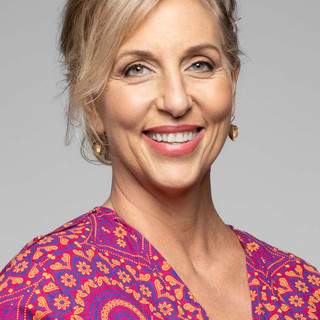
Written By
Niall Campbell is also known by his traditional name Phokojwe (The Jackal) and is
traditional doctor nyanga (medicine man) and a Ngaka ua diKoma, a Doctor of the Law. He
has also been the subject of numerous documentary films and interviews, and is widely
regarded as one of the top experts in Southern African Natural Lore and Ancestral Work.
With his older brother Colin, he works with the wisdom traditions of Southern Africa,
specifically those that are based on our relationships with the ancestors and spirits of nature
and African knowledge systems.
There are many books written about him, or ones he features in, and perhaps one of the
most celebrated is the book by award-winning, internationally published journalist Sylvia
Vollenhoven titled Keeper of the Kumm: Ancestral Longing and Belonging of a
Boesmankind. In the book (soon to be released as a documentary), she details her work with
Niall as her sangoma guide in which he takes her out of a long, nameless illness though the
process of working with her long-ago ancestor, //Kabbo.
He works with clients from all over the world, many who travel to his home in
Botswana or Cape Town to work with him in deeper immersions in nature for men’s
initiations, and he works with both traditional and urban people to re-establish some of the
deep understandings of ancestors and nature. For many years, he was widely known as a
doctor of initiation up in the bush of Botswana, taking people through the sangoma training
and initiation process of twasa.
His work with the indigenous communities and in the wilderness started as a child,
when he would take lengthy trips with his father into the desert and deep into the Tsodilo
Hills in northwestern Botswana.
Niall was fluent in several of the local languages and grew up with the herd boys on his
farm and in the surrounding areas. But from the age of nine, Niall was plagued by strange and
vivid dreams. It was the start of a run of bad behaviour. He hated school and was in endless
trouble there. He was also being kept awake by vivid dreams, visions and absence seizures.
When he was 12, he was walking alone on his farm when he was gored by a bushbuck.
In the sudden attack, the buck’s lethal horns ripped his abdomen open, perforated his bowel
and put him in hospital for a lengthy recovery. His father was a personal friend of the
Mbukushu and Ju/’hoansi (San) residents at Tsodilo and on his next long trip he took Niall to
his friends for a healing dance to find out what was causing these troubles.
The cause of the trouble with Niall, said Old Man D/ao, was the bush ancestor, the one
called Mbwawa or Shimbu, the jackal. Old Samochao was adamant. The Basarwa could not
cure this affliction. Only the Hambukushu knew how. There he was initiated as a medium for
nature spirits of the type that inhabit hills and caves. These spirits, appearing in the form of
predatory or carnivorous animals, play an important role in traditional society by regulating
the interaction between humans and nature. Mr Samochao Mareka of the Hambukushu
people conducted the initiation.
‘Maybe it was just the way of my teachers, or maybe it was the way of traditional
culture in the 1980s, I’m not sure,’ Niall says. ‘There wasn’t much more explanation than the
simple statement, ke Badimo – it’s the Ancestors.’
When he was 14, Niall became apprenticed to Hosea Mashudu Chaoke, a
Venda/Shangaan traditional healer from Zimbabwe. He spent five years learning diagnostic
divination and treatment from him.
Learning to be a traditional doctor was not how he expected to spend most of his
teenage years. Living and working in the bush and learning ‘doctoring’ made him different
from his peers at school.
‘Under my shirt there were beads and amulets. And in the bottom of my rucksack there
was a little tin of “emergency” herbal medicine.’
He learnt divination and herbal medicines, sickness, treatment and ritual. He was later
to go through lebollo, now called men’s initiation.
‘I learnt secret things, and things that concerned Badimo, the Ancestors. But I also
learnt a huge amount about nature, the bush, animals and plants. More than anything, I learnt
how culture is shaped by natural environment, and what beauty there is in experiencing
people connecting deeply with the many layers of nature.’
This is an extract from The Other Side: Journeys into Mysticism, Magic and Near Death.
Sarah Bullen is a multi-published author and literary agent. Her books include The Other
Side: Journeys into Mysticism, Magic and Near Death
Love and Above: A journey into shamanism, coma and joy.
Write your Book in 100 Days
and link to each book on Wix pages and the Amazon and Takealot links :
Amazon
https://a.co/d/bEiuGNY
Takealot
You have to want it so hard that it hurts
‘I want to be an author’
‘I want to write a book’
These are conversations I have on a daily basis. Truthfully I am a bit tired of this messaging. Of course this is NOT what I should be saying. I should be encouraging you to write a book, right? This is my business – coaching and supporting authors.
So why am I saying this? Because you don’t know how LONG and HARD it is. I see all these ‘coaches' who tell you that you should write a book, that it will ‘build your brand.’ Hmmmmm.

What are publishers looking for this year?
Once again, we turn our attention to the publishing market and the trends shaping the upcoming cycle. For authors, understanding what readers are buying is invaluable—particularly in non-fiction, which must tap into the mood of the times. That said, a book can also spark a global trend, unleashing a new concept and capturing imaginations in unexpected ways. The “Let Them Theory,” for example, demonstrates the power of fresh ideas, amplified by podcasters, social media, and celebrity influence.
