

Writing Lessons
4/19/21
Ten lessons from self-publishing romance novels
Francine Beaton writes romance novels. We asked to help us out by sharing some of the lessons she has learned. As a self-publishing...
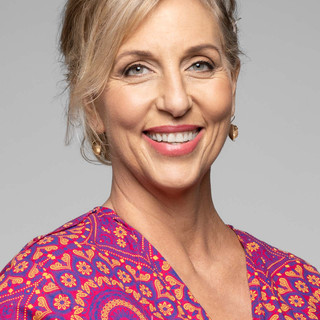
Written By
Francine Beaton writes romance novels. We asked to help us out by sharing some of the lessons she has learned.
As a self-publishing author, I’m often asked whether it’s worthwhile doing everything yourself. Let me tell you, self-publishing is not for everyone. It requires dedication, determination and self-discipline. I’ve learned so many lessons along the way. Some of them were hard lessons, having lost money and valuable time by making stupid mistakes.

1. It’s never too early to build your platformYes, long before you even think of publishing your book, you need to create an online presence. Before you can do that, you need to ask yourself several questions of how you want to set up your author business. Do you need a logo or a website? Which social media sites do you want to use? It is best to stick to the ones you spend most of your time on. Set up your author profiles. Make friends with other authors. Share their new releases. When your release is due, they’ll be happy to do the same for you. (And yet, I still struggle to ask favours. Go figure!)
2. You need to see yourself as a businessIf you want to self-publish, you need to see yourself as a business. That will be your job, and what will pay your bills. If you’ve started any other business to make money, you would’ve done the same. Create a business plan if that will help you. You must remember, you and your books are the assets of the business. You’ll need to know how to utilise, market and protect your assets, just like any other business. You need to know how to budget and plan. For example, you need to set up that marketing plan long before you hit publish.
3. Do your homework
Before you can publish, you need to figure out how to do it. Learn the terminology. What is an What is "wide” and what is KU, how to register as an author on Amazon, how to get paid, where to get your ISBN numbers, formatting requirements, platforms to publish, what is the etc? Those are steps you need to take before you publish.
4. Know your genre
It sounds simple. I write romance, but when I started publishing, I learned there are so many sub-genres, it’s scary. If you don’t know where your book fits in, you may market it incorrectly. You may use the wrong keywords and put it in wrong promotions or categories. If you do not understand your own genre, you can choose the wrong book cover. Publisher Rocket is an awesome tool for that purpose, but there are other ways to do it too. For example, watch David Gaughran’s YouTube video’s or Brian Cohen’s Amazon Ad challenge, where they show you different ways to figure out your categories.
5. Choose your service providers wisely
This relates to your book cover designers, your book formatters, your editors and proofreaders and all those fly-by-night marketers. Ask for recommendations but still do your homework. One day you’ll be lucky to find that one person you can work with, who understands you and your books and your dreams and visions.
6. Don’t rush in where angels fear treading
Oh, this is a minefield. I printed too many books too soon. I enrolled for a course that was not for me. I wasted money on an editor who shouldn’t be trusted with writing a menu. Therefore, do your homework. Persevere. And accept your mistakes.
7. Be prepared to learn
As a self-publisher, you need more skills than only writing. I mentioned earlier that your book is your asset, therefore you need skills to market your assets. It is all so overwhelming. There are Bookbub ads, and Amazon ads and Facebook ads. There are Goodreads and BookBinge and newsletters and Instagram marketing and Pinterest marketing and too many others to mention. Where do you start? My advice is to take it one step at a time, otherwise you will panic realising you need to learn so many things. Last year I concentrated on learning Amazon ads and Facebook ads (and still hadn’t mastered it). This year I focus on newsletters. Yes, so many books on my shelf, but when I started in January, I only had 150 newsletter subscribers. If you need a recommendation of where to learn these skills, I can highly recommend InkersCon. I’ve attended last year and already enrolled for this year’s conference.
8. Grow a thick skin
I promise you, you will get bad reviews and you will get awesome reviews. Learn from those 1* or 2* or even 3* reviews if they supply concrete criticism. Not only that, people might not like your cover, or your layout or whatever. Learn to deal with it.
9. Take time for yourself
Sometimes we focus so much on our writing and the marketing of our book, we forget to take time for ourselves. You need to take breaks and know when to relax. It’s okay not to write every day. It’s okay to take a step back and adjust your schedule if necessary. Life happens. Accept it and reset your goal posts. Remember: Rome wasn’t built in one day.
10. My most valuable lesson
My most valuable lesson, however, is not about my writing. It is about me. Recently I had to draw up a CV. I haven’t worked in any official capacity for 22 years so I didn’t know what to put on my CV. When I started, however, I was shocked by the number of skills I’ve gained since self-publishing like marketing and ad strategies. I’ve learned to use new programmes like Plottr, Canva, Vellum, BookBrush, and many others. I’ve learned that even though I’m 58 years old, I’m not too old to learn, adapt, and improve. And that is the most satisfying feeling.
BIO

Born in South Africa, romance author Francine Beaton now lives in Glasgow with her Scottish-born husband and daughter.
It’s easy to figure out why Francine's debut novel, Eye on the Ball, as well as the series, Playing for Glory, has rugby as a theme. During rugby season, you’ll find her either next to the pitch or in front of the television, following her favourite teams. That came as a legacy from her childhood, watching the game with her father and three older brothers. She adopted the motto, "If you can't beat them, join them."
When she is not reading or writing about love and Happy Ever After, she’s most likely busy painting or taking photos of everything that catches her eye.
SOCIAL MEDIA LINKS:
Website: https://www.francinebeaton.com

Book Lengths What Are You Aiming For?
Where are you going with all this writing? Well, you are mostly likely shooting for a minimum of 50,000 words. Why 50,000? It is the minimum word count for a book with a spine that can sit on a shelf in a bookstore. ASK YOURSELF What do you want to write? Get clear! Is it a book or something else? It could be a: Full-length book: 70,000-80,000 words Novella 30,000 words E-book: 10,000-50,000 words E-course An essay: 1,500 words A blog: 300 words A speech: 2,000-4,000 words A TED talk: 4,000...

You have to want it so hard that it hurts
‘I want to be an author’
‘I want to write a book’
These are conversations I have on a daily basis. Truthfully I am a bit tired of this messaging. Of course this is NOT what I should be saying. I should be encouraging you to write a book, right? This is my business – coaching and supporting authors.
So why am I saying this? Because you don’t know how LONG and HARD it is. I see all these ‘coaches' who tell you that you should write a book, that it will ‘build your brand.’ Hmmmmm.
